
Bitch, I've got your number. You’ve been hiding so long, you’ve killed your personality
- Something is keeping you from showing up.
You might call it perfectionism.
You might call it imposter syndrome.
You might call it "I just don't know what to say."
You might not call it anything at all —
You just know that every time you think about being visible,
Something in your body says no.
There's a reason for that. And it's not the reason you think.
I'm ready to show up




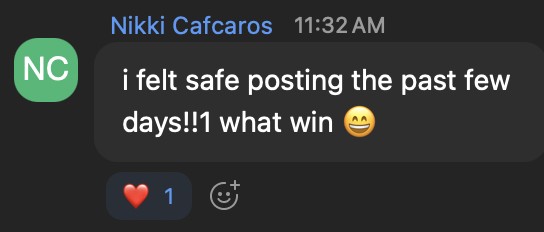
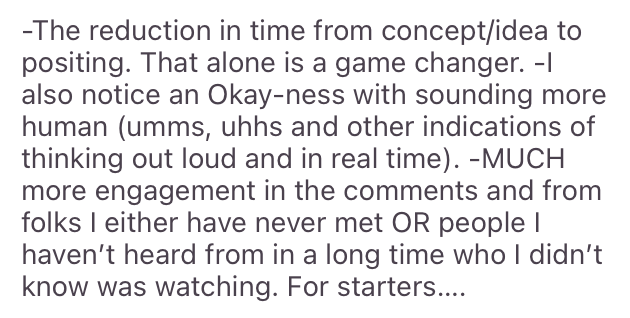
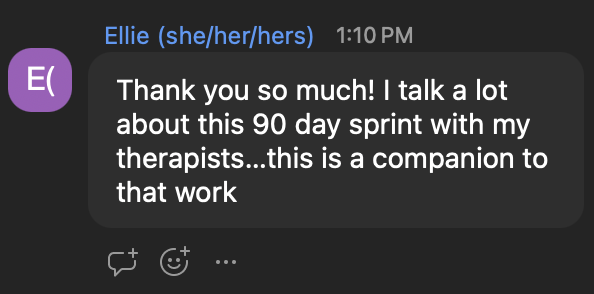
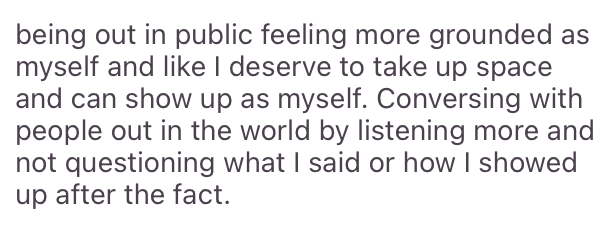

Bitch, I've got your number.
Let me guess.
You have thoughts. Ideas. Strong ones. You've lived a LIFE. You have a story that could help people.
But when the camera turns on, you become… careful. Managed. Pleasant. Agreeable.
You hit the big red button and suddenly feel like you have never spoken the English language before. You show up on Zooms and FaceTimes all day long — but the second it's just you and the lens, it's like your entire personality leaves your body.
You almost post. All the time.
You rewrite the caption five times and still don't trust it. You script the video. Do 12 takes. Spend 4 hours on it. Then don't post the damn thing.
Your drafts are a graveyard — full of videos you almost had the nerve to share.
You study viral trends and steal hooks from creators who seem to know what they're doing. You screenshot their captions. You save their reels. You tell yourself you're "doing research."
You watch people with half your depth blow up online while you sit there thinking:
"Why can't I just… be myself?"
And underneath all of it, there are really only two fears running the show.
You're afraid people will see your stuff and say mean shit. Judge you. Reject you. Confirm every reason you've been hiding.
Or — and this is the one you don't say out loud — you're afraid that no one will see it. That you'll put yourself out there and get nothing. Silence. No likes, no comments, no response. Because that would confirm something even worse than judgment: that you don't matter. That nobody cares. That you were right to stay invisible.
So you stay in the middle. You almost show up. You half-post. You hover. You lurk.
If you feel thoroughly dragged right now, good.
I know this in my bones because this was me.
Deeply. Painfully. Embarrassingly.
When I started posting on social media, nobody was more crafted, more polished, more desperately trying to get it "right" than me.
What's my niche? How much value can I fit into a 30-second video? Is my lighting perfect? How's my hair? Does this make me look smart? Am I being too much? Am I being enough?
I was a Broadway actor who had performed in front of thousands of people — and I couldn't press "post" on a 15-second video.
And it didn't stop at content. I brought that same overmanaged, over-edited energy into my entire life. Every conversation, every relationship, every room I walked into.
I was terrified of being abandoned. Terrified of disappointing anyone. I made sure the needs of every single person around me were met before I even considered my own. People-pleaser extraordinaire. Professional shape-shifter. Whatever you needed me to be, I was already becoming it before you finished your sentence.
If any of that sounds familiar — keep reading.
Because the thing you think is wrong with you isn't what's actually wrong with you.
The thing stopping you from posting is the thing stopping you from everything.
This isn't a social media problem.
It's a self-trust problem.
And it didn't start with content.
When you were young — and I don't know your specific story, but I know the shape of it — at some point you were either told you were too much or not enough. And you got really good, really early, at changing into whatever you thought you needed to be to make the people around you happy.
None of this is your fault.
You learned to read the room before you entered it. You learned to adjust. To soften. To perform.
And those adjustments didn't stay temporary. They calcified. They became habit. And eventually, the habits became so familiar that you mistook them for your personality.
"Being yourself" — what you've been calling yourself — is actually just a system of behaviors you built to keep other people comfortable. Your life is what it is because of these behaviors. Your world is as constructed as the performance you've been running. You've shown up for others in your own life for so goddamn long that you genuinely don't know what your own voice sounds like without an audience to shape it for.
And here's the part that makes this so hard to see: the performance worked.
It built you a really good life. Because overachievers tend to do that — we are overachievers for a reason. We felt we had to prove ourselves at a very young age, and we proved ourselves by constructing this external version of ourselves that we wanted the world to see. And we got rewarded for it. Promotions, relationships, praise, success.
You went from being yourself to being likable to being tolerable to being invisible. And each step felt like progress because people kept clapping.
So you're sitting there thinking "but I'm fine?" And maybe you are. You're functional. You're successful. You might even identify as confident.
But easy doesn't necessarily mean true. Easy doesn't necessarily mean authentic. Self-betrayal can feel remarkably simple when it's all you know.
And "be yourself" — that advice everyone gives you? It's possibly the most overused and least helpful advice ever. Because when somebody tells you to be yourself, you just silently swallow the guilt that you have no idea how to do that. Or who that self even is.
This is why you are unhappy. This is why you are so fatigued all the time. Not from the work. From the people-pleasing. From the relentless, invisible labor of maintaining a version of yourself that was never actually you.
That's why posting feels so impossible.
It's not some other dimension. It's a mirror. Posting is a mirror for how you show up everywhere — and most people cannot handle what they see.
You show up for the Zoom. You show up for the FaceTime. You show up for the dinner party. And you're great. Funny, even. Charming.
But that's because there are other people in the room giving you signals and cues of who to be. You're reading them and becoming what they need in real time. You've been doing it your whole life. You're exquisite at it.
Now take the people away.
It's just you and the camera. No cues. No script. No one to shape-shift for.
And you have no idea who the fuck you are.
You're not inconsistent. You're not lazy. You're not bad at content.
You're disconnected from yourself. And you have been for a very long time.
Don't believe me? Get through this list without cringing:
You don't know what to say — Because you don't think anything you'd say is worthwhile.
You freeze when the camera's on — Because the camera is their eyeballs. Your aunt Phyllis, your coworker, everyone who you're convinced would reject the real you. You freeze when anyone's watching. The camera just makes it unavoidable.
You're waiting to feel ready — Because if you admit that doing it before you're ready was always the answer, you have to contend with how much time you've wasted. So you keep waiting.
You took the strategy courses, learned the hooks, still didn't show up — You hoped the right plan would make you feel good about who showed up. It didn't, because strategy can't fix a self-trust problem.
You avoid posting and you know you're avoiding it — You tell yourself you don't want to be a creator, but that also means you never have to face the camera. Convenient, right?
You cringe watching yourself back — The disconnect between who you really are and who you're performing is so glaring you can't even look at it.
Your drafts are full of videos you'll never post — Because the real stuff lives there and the sterilized version is what goes public. Your drafts are the graveyard of every honest thing you almost said. Just like everything you've ever swallowed in a conversation, at dinner, in a meeting.
Editing takes you forever and you hate it — Because you've been editing yourself your whole life. The timeline just gave the self-loathing a workspace… but it feels like an act of self-violence.
You delete posts ten minutes after publishing — Same thing as agonizing over that text to the person you're dating, sending it, then panicking all day when they don't respond. Except this time you can unsend it. So you do.
You study what everyone else is doing before you post — Because you've never trusted that you could possibly be enough on your own. You put other people on pedestals because then you have someone to become instead of yourself.
The voice in your head won't stop narrating how you're coming across — Those voices didn't show up when you started creating content. They've been directing the performance your entire life. The camera just gave them a stage where you can finally hear how loud they've always been.
…That's what I thought. Keep scrolling, bb.
And here's one more thing no one's told you:
The more remarkable your life, the harder it is to talk about. And I don't mean that as a compliment. I mean it as a diagnosis.
There's a concept called the curse of knowledge — once you've lived inside of something deeply enough, you lose the ability to feel its weight. The extraordinary thing becomes Tuesday. So when you say you were the first person in your family to go to college, you say it like it's nothing. When you say you rebuilt your business after going completely broke, you deliver it like it's background information. When you say you did the thing while raising kids as a single parent, while grieving someone, after moving to a country where you didn't know a soul — you bury it casually, like it's unremarkable.
But unremarkable delivery is a protective mechanism. If you say it flatly, no one can accuse you of bragging. No one can say you think too highly of yourself. You're doing what you've always done: making yourself smaller so other people feel comfortable.
That stranger scrolling who stumbles on your content? They're not bored of you. They're not used to you. They could think your life is fascinating. The only person who doesn't is you.
No one trusted his impulses and instincts less than me. No one wanted to make the worlds of others better so they wouldn't reject him more than I did. I've spent five years using social media as a way to find my voice and step into my power — as a tool for self-exploration and self-affirmation — and working with hundreds of people on this, I've seen these same blocks hit over and over and over.
And before you scroll away thinking "ugh, this is too heavy… I just need a content calendar to stick to…"
More strategy won't fix this. More hook templates won't fix this. No amount of GPT therapy or Claude writing scripts for you will fix this.
You already intellectually know what you should be doing.
The block is in your body — not your brain.
So if strategy can't fix it, and you can't think your way out of it — what actually works?
"Justin knows just what to say because he has that self-confidence and that certain spark that he can teach you. There's no fluff-none of whatever baggage you might carry from previous coaches or challenges. This is authentic. I promise you, it is the real deal. Can you put a price on self-confidence? Seriously, can you? Because that's what I got out of this."
-JENNY DAHLBERG, SHOWUP90 GRADUATE
This Isn't Content — This Is a Self-Trust Problem
The thing stopping you from posting is the thing stopping you from everything. This isn't a social media problem. It's a self-trust problem. And it didn't start with content.
When you were young — and I don't know your specific story, but I know the shape of it — at some point, you were either told you were too much or not enough. And you got really good, really early, at changing into whatever you thought you needed to be to make the people around you happy.
None of this is your fault.
You learned to read the room before you entered it. You learned to adjust. To soften. To perform. And those adjustments didn't stay temporary. They calcified. They became a habit. And eventually, the habits became so familiar that you mistook them for your personality. "Being yourself" — what you've been calling yourself — is actually just a system of behaviours you built to keep other people comfortable. Your life is what it is because of these behaviours. Your world is as constructed as the performance you've been running. You've shown up for others in your own life for so goddamn long that you genuinely don't know what your own voice sounds like without an audience to shape it for.
And here's the part that makes this so hard to see: the performance worked. It built you a really good life. Because overachievers tend to do that — we are overachievers for a reason. We felt we had to prove ourselves at a very young age, and we proved ourselves by constructing this external version of ourselves that we wanted the world to see. And we got rewarded for it. Promotions, relationships, praise, success. You went from being yourself to being likable to being tolerable to being invisible. And each step felt like progress because people kept clapping. So you're sitting there thinking, "But I'm fine?" And maybe you are. You're functional. You're successful. You might even identify as confident.
But easy doesn't necessarily mean true. Easy doesn't necessarily mean authentic. Self-betrayal can feel remarkably simple when it's all you know. And "be yourself" — that advice everyone gives you? It's possibly the most overused and least helpful advice ever. Because when somebody tells you to be yourself, you just silently swallow the guilt that you have no idea how to do that. Or who that self even is. This is why you are unhappy. This is why you are so fatigued all the time. Not from the work. From the people-pleasing. From the relentless, invisible labor of maintaining a version of yourself that was never actually you.
That's why posting feels so impossible. It's not some other dimension. It's a mirror. Posting is a mirror for how you show up everywhere — and most people cannot handle what they see.
The Mirror Doesn't Lie — You've Just Been Performing
You show up for the Zoom. You show up for the FaceTime. You show up for the dinner party. And you're great. Funny, even. Charming.
But that's because there are other people in the room giving you signals and cues of who to be. You're reading them and becoming what they need in real time. You've been doing it your whole life. You're exquisite at it.
Now take the people away. It's just you and the camera. No cues. No script. No one to shape-shift for. And you have no idea who the fuck you are.
You're not inconsistent. You're not lazy. You're not bad at content. You're disconnected from yourself. And you have been for a very long time.
Don't believe me? Get through this list without cringing:
You don't know what to say — Because you don't think anything you'd say is worthwhile.
You freeze when the camera's on — Because the camera is their eyeballs. Your aunt Phyllis, your co-worker, and everyone who you're convinced would reject the real you. You freeze when anyone's watching. The camera just makes it unavoidable.
You're waiting to feel ready — Because if you admit that doing it before you're ready was always the answer, you have to contend with how much time you've wasted. So you keep waiting.
You took the strategy courses, learned the hooks, still didn't show up — You hoped the right plan would make you feel good about who showed up. It didn't, because strategy can't fix a self-trust problem.
You avoid posting and you know you're avoiding it — You tell yourself you don't want to be a creator, but that also means you never have to face the camera. Convenient, right?
You cringe watching yourself back — The disconnect between who you really are and who you're performing is so glaring you can't even look at it.
Your drafts are full of videos you'll never post — Because the real stuff lives there and the sterilized version is what goes public. Your drafts are the graveyard of every honest thing you almost said. Just like everything you've ever swallowed in a conversation, at dinner, in a meeting.
Editing takes you forever and you hate it — Because you've been editing yourself your whole life. The timeline just gave the self-loathing a workspace… but it feels like an act of self-violence.
You delete posts ten minutes after publishing — Same thing as agonizing over that text to the person you're dating, sending it, then panicking all day when they don't respond. Except this time you can unsend it. So you do.
You study what everyone else is doing before you post — Because you've never trusted that you could possibly be enough on your own. You put other people on pedestals because then you have someone to become instead of yourself.
The voice in your head won't stop narrating how you're coming across — Those voices didn't show up when you started creating content. They've been directing the performance your entire life. The camera just gave them a stage where you can finally hear how loud they've always been.
…That's what I thought. Keep scrolling, bb.
Your Life Isn't Boring — You've Just Learned to Hide It
And here's one more thing no one's told you:
The more remarkable your life, the harder it is to talk about. And I don't mean that as a compliment. I mean it as a diagnosis.
There's a concept called the curse of knowledge — once you've lived inside of something deeply enough, you lose the ability to feel its weight. The extraordinary thing becomes Tuesday. So when you say you were the first person in your family to go to college, you say it like it's nothing. When you say you rebuilt your business after going completely broke, you deliver it like it's background information. When you say you did the thing while raising kids as a single parent, while grieving someone, after moving to a country where you didn't know a soul — you bury it casually, like it's unremarkable.
But unremarkable delivery is a protective mechanism. If you say it flatly, no one can accuse you of bragging. No one can say you think too highly of yourself. You're doing what you've always done: making yourself smaller so other people feel comfortable. That stranger scrolling who stumbles on your content? They're not bored of you. They're not used to you. They could think your life is fascinating. The only person who doesn't is you.
No one trusted his impulses and instincts less than me. No one wanted to make the worlds of others better so they wouldn't reject him more than I did. I've spent five years using social media as a way to find my voice and step into my power — as a tool for self-exploration and self-affirmation — and working with hundreds of people on this, I've seen these same blocks hit over and over and over. And before you scroll away thinking "ugh, this is too heavy… I just need a content calendar to stick to…"
More strategy won't fix this. More hook templates won't fix this. No amount of GPT therapy or Claude writing scripts for you will fix this. You already intellectually know what you should be doing.
The block is in your body — not your brain.
So if strategy can't fix it, and you can't think your way out of it — what actually works?
You can't become yourself in private.
You already know this because you've tried. You've journaled. You've therapied. You've done the inner work. And it helped — genuinely. I love therapy and journaling. I do both. But here's what they can't do. People-pleasing, hiding, your personality shrinking, performing a version of yourself that simply is not real — those aren't just thoughts. That is a full-on nervous system response. And it's triggered by one specific thing: other people watching you.
That's the moment. That's when you go small. That's when you say what you think they want to hear. That's when you edit yourself into something palatable. And you've got a lot of years of practice at it. You're real fucking good at it.
Therapy doesn't create that condition. Journaling doesn't create that condition. They are incredibly valuable — but in doing them, you are practicing a new response to a stimulus that never shows up in the room. They're amazing for the inner healing. But your life doesn't actually change unless you take that inner healing and externalize it.
Think about it like this: this is a gymnast training for the Olympics having never done the balance beam in front of an audience. You can practice the routine alone in the gym until it's perfect. But the thing that makes the Olympics terrifying isn't the routine — it's the crowd. And if you've never performed with the crowd present, you're not actually ready. You've never practiced the hard part.
Every major discipline that studies how humans actually change arrives at the same conclusion. Exposure therapy research confirms you can't extinguish a fear without the trigger present. Sociologists have proven the self is built through social interaction, not private reflection. Neuroscience shows it takes 66 to 150 days of repetition before a new behavioral pattern sticks.
Exposure therapy research confirms you can't extinguish a fear without the trigger present.
Sociologists have proven the self is built through social interaction, not private reflection.
Neuroscience shows it takes 66 to 150 days of repetition before a new behavioral pattern sticks.
Which means the version of you that speaks freely, confidently, and without apology doesn't emerge from more reflection. It emerges from repeated practice — in the presence of the trigger. With the potential that the audience you're about to do this thing for might not like it. The risk is not optional. The risk is the whole point.
And direct-to-camera content is the most accessible, most repeatable, most ruthlessly honest version of that practice that exists. Because there's no one there to shape-shift for. No cues to read. No room to perform. It's just you — and the version of yourself you've been running from.
Most people use social media for validation — what do people want to see from me, how do I get the likes, who do I need to be for this to perform? That's just the same habit wearing a different outfit. More people-pleasing. More reading the room. More becoming what you think the world wants.
This is the opposite. This is using social media as a method for unlearning your need for external validation altogether. This is summoning something up from the depths of your actual body, processing it without editing or filtering, and letting it come out of your mouth. Not because it's easy — but because every time you do it, you are massaging out the physiological and somatic knots that have kept you performing instead of living.
When you show up on camera and say the true thing — and survive — your body starts to learn what your brain has known for years: that nothing catastrophic happens. That you're still here. That you're okay.
By recording a video and putting it out, you are saying: I deserve to take up at least the amount of space that this video takes up. And I don't need anyone's permission to do that.
That's what this is really about. Using these videos as a chance to affirm your own fucking humanity.
And then you go back into the world. Into the room with your family. Into the conference room with your team at work. Into the conversation you've been avoiding. And you are different — because you've already practiced being that person out loud, with stakes, with people watching.
And here's the part that might surprise you: that sensitivity you've been treating like a liability? It can work for you. Because it allows you to inhabit yourself with more agency and intention once you learn how to use it. The same nervous system that makes this hard is the one that makes you extraordinary at it — once you stop running from the discomfort and start moving through it.
You don't find yourself by thinking about who you are. You feel into it. Through action. Through practice. Through being witnessed. "How would I respond to this? How do I actually feel about that?" is a far more useful question than "who am I?" — because "how" implies action, and identity is built through action, not reflection.
Repeated exposure. Nervous system safety while being seen. Learning to be an objective and fair witness to yourself — to hear your own story the way a stranger would hear it for the first time. That's the formula. That's it.
Showing up, saying the true thing, being witnessed while doing it — that's not the reward at the end of the work. It is the work. This is purposeful unmasking. And it will change your life.
This isn't always going to be easy. But it absolutely cannot come from a place of apology. That's what ShowUp90 is built around.
Now — why me?
I'm Justin Schuman. Human is in my last name.
And I grew up in a world that kept putting me in boxes until I started doing it myself. The Jewish kid in a school full of kids who celebrated Christmas. The one with the funny last name everyone misspelled — and the bully in second grade who made me self-conscious about it. I came out at 14 and quickly learned that high school would be unkind to a gawky, skinny, gay kid who liked to sing, played Sky Masterson in Guys and Dolls, and joined the dance team that performed on the 50 yeard line at half-time of the football games. Go Wildcats.
My solution was playing the part of an overachieving perfectionist teacher's pet. My performance relied heavily on ambition and success to distract from the things I was hiding. Part of that success was making it all the way to Broadway. But once I was there, standing on the stage I'd worked my whole life to reach, I realized something uncomfortable: I'd been performing a version of myself for so long that I'd lost track of who the Justin was underneath.
I got my degree in theater and performance studies. And one theory I learned — which changed everything for me — is that identity isn't something you express through action. It's something you become through it. You don't perform who you are. You become who you repeatedly perform. So I decided to test that theory. I started showing up online — as myself — and discovered that social media, the thing most people treat as a highlight reel, could be something else entirely.
A stage for practicing being myself. Publicly. Repeatedly. Until it stopped being scary and started being just… me. I gave a TEDx talk on this in 2022 called The Practice of Being Yourself. I've guest lectured at top-tier universities.
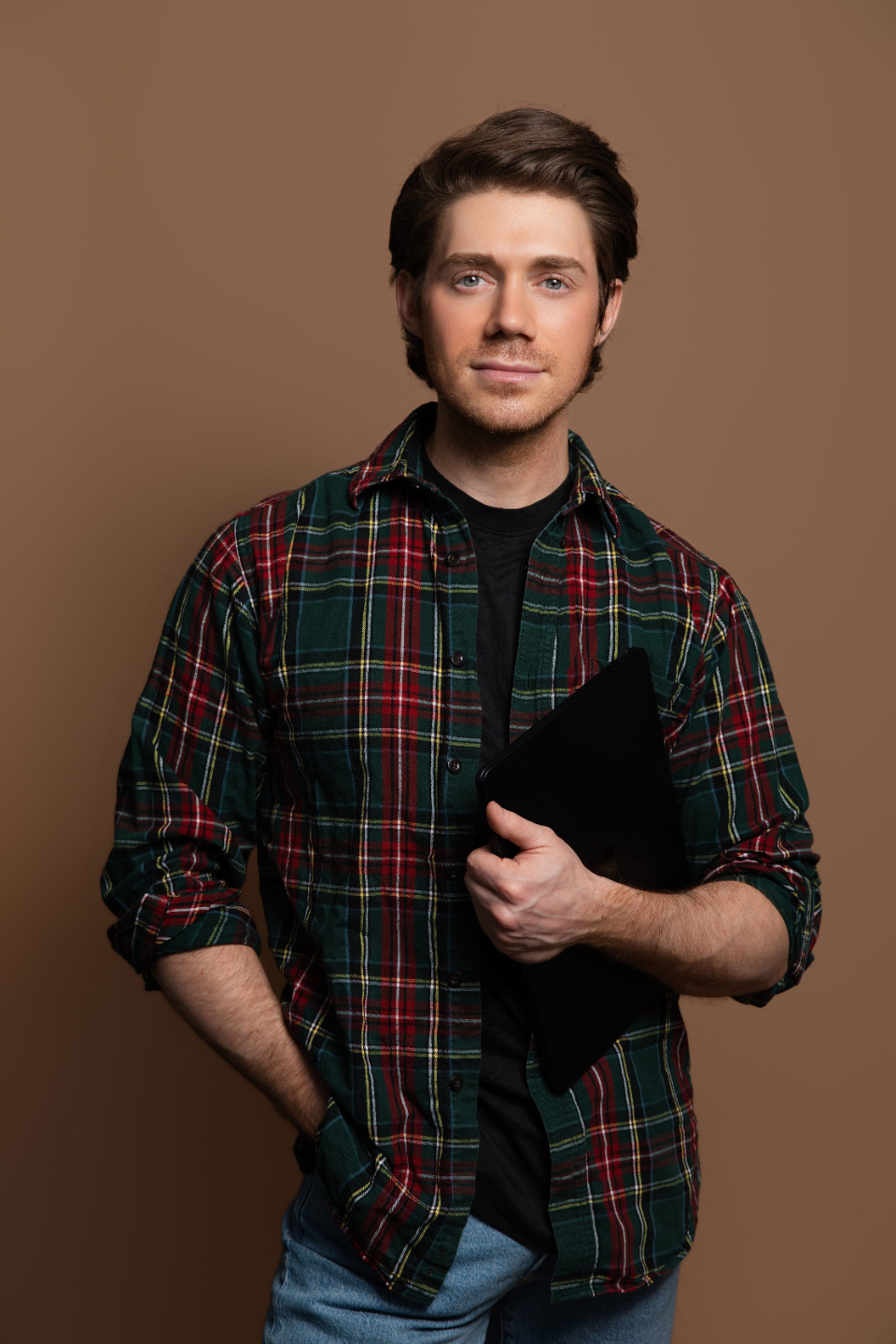
I've been interviewed on more podcasts than I can count. I built a business being myself — flexing the skills and magic I spent years hiding — and did nearly half a million dollars in revenue in 2025. I have never run a single paid ad. And over 70% of people who apply to work with me privately say they did so after seeing just one piece of my content.
I don't actively think about what my audience wants to see. I don't consider myself to have a niche. I feel free to post about all parts of my life. I've still grown to over 900,000 followers across platforms — because I used posting as a method for unlearning everything I had been doing to performatively be what I thought the world around me wanted me to be. I made building trust on the internet an art. And how to yap on camera — unscripted, unfiltered, unafraid — my science. I pioneered talking-to-camera video as a form of self-discovery before the rest of the internet caught up.
I'm neurodivergent, which means the neurotypical playbook has never worked for me. I've had to build systems from scratch — ones that work for my body and my brain, that land on a somatic level, because I function from intuition before anything else. I was a professional photographer for 15 years, which means I've spent over a decade making people feel safe in front of a camera and helping them access something real. I carry deep emotional awareness built through grief and trauma. And I've grown this platform just by being myself — publicly, repeatedly, with the volume up.
Five years of this, and I still question my choices sometimes. But I show up and do it anyway. Because I know that every time I do, I'm not simply making a video. I'm becoming someone who shows up. And that's what I want for you too.
ShowUp90 exists because I have watched brilliant, capable people stay invisible. Not because they lack talent or ideas — but because some mental version of their second-grade bully is preventing them from sharing their real selves with the world. Ultimately, ShowUp90 isn't about growing your social media. It's about helping you grow. Using social media. If you do the work, the work works. Social media is the mirror. ShowUp90 is the practice.
Something I don't always think to mention when I share my story, because it is just that — part of my story — is that in 2015, I lost my sister in a car accident.It's one of those things that punctuates your life into "before" and "after." And it changes you on a genetic level, traumatic grief.But one of the odd, unexpected symptoms of loss on that scale is that so much just doesn't fucking matter after that.
So you could look at it like I have a handicap. Like it's easier for me not to care what others think. And you know what — maybe it is. Because what really matters if no one is dead?But if this horrific thing I went through is the reason I can show up and shine and share and BE — and that helps you learn how to find yourself again — then that's beautiful. I believe that trauma is ours to do with what we please. And I fold mine into my story.
In a way, my sister Jordan is with me always because of this work. She was definitely a lot. "Too much." And in her eulogy, I encouraged us all to embrace our "muchness." That's what I continue to do daily.So that you too may give fewer fucks about what people think and finally live the one life you've been given.You have no fucking time. It's running out every second.How could you make any other choice than to just show up.
Three paths in. One way through.
Wherever you're starting from, someone who looked exactly like you has already done this. Read their full story.

- Explicitly refused to make videos—told her husband "never, ever"
- Shy, quiet, and visibly uncomfortable on camera
- Had been filtering herself since college; lost her unapologetic self
- Couldn't voice what she wanted to say without restrictions
- Avoided vulnerability—"I'm not a vulnerable person"
- Posted every single day for 90 days
- Voices what she wants to say without restrictions or shame
- Her husband says she "returned—and stronger than ever"
- Struck up a 30-minute conversation with a stranger at Target
- Feels brighter, more herself, more free
The Full Story
Cindy had a specific, vocal relationship with the camera: she was against it. Not hesitant—actively opposed. Her husband would tell her to make videos about the things she was brilliant at. She said no. Every time. "I used to tell my husband I would never do this. I would never get in front of a camera, I would never speak to it."
What made her finally say yes to ShowUp90 wasn't a change of heart about content creation. It was something quieter—a recognition that the woman who showed up in private and the woman who showed up in public had become two different people. Somewhere between high school and adulthood, she'd started filtering herself. And she was tired of it.
The first 30 days were exactly as uncomfortable as she expected. She thought she looked stupid. She didn't want to show her face. The cringe was real. But she'd made a commitment, and she kept it. "Those 30 days were essential—they built confidence and honestly let the ego die."
By Day 30, the awkward phase started to lift. Not because she'd gotten perfect—but because she'd done enough reps that being on camera stopped feeling catastrophic. Around Day 60, strategy started to click in a way it never had from courses alone. She realised the strategy had always been available to her. She just hadn't been regulated enough to use it.
The final 30 days were her words: the easiest. Her authentic self and her strategy had merged. The performance was gone. "I feel a complete shift from who I used to be. I definitely feel a lot brighter and a lot more myself."
Her husband noticed first. He said she'd come back—the unapologetic version of herself he remembered from high school. The proof showed up off-camera too: a 30-minute conversation with a complete stranger at Target. Unthinkable at Day 1. Unremarkable at Day 90.
"The first 30 days were about getting through the awkward phase. The next 30 were when things started to click. The final 30 were the easiest. My confidence changed so much—and I feel happy and fulfilled."
—Cindy Gomez, ShowUp90 Graduate
- Felt like a "dinosaur in the online space"—like she'd missed the bus
- Generally fearless in life—loathed that cameras got to her
- Nervous system so dysregulated she struggled to even locate her opinions
- Stuck and scared—couldn't take a stand on camera
- Knew what she wanted to say to clients in person; froze online
- Still scared—does it anyway. That became her definition of courage.
- Off-the-cuff video on a bold opinion landed 30K views across platforms
- Able to take a stand in public without the spiral
- Describes the result as "sustainable life change"—not content tactics
- More courageous. "Which feels really great to say."
The Full Story
April came to ShowUp90 carrying a specific kind of frustration. She was nearly 40, established in her work, generally fearless in life—and completely undone by a camera. She knew it didn't make sense. She was furious about it. "In life I'm generally pretty fearless. But showing up in front of a camera felt very scary, and I hated that. Like, I loathed that."
She'd watched others build audiences for years, feeling like she'd come to it too late, gotten in too far behind. The online space felt overwhelming and alien to who she actually was. The gap between her in-person authority and her on-camera freeze was causing real damage—not just to her content, but to her business visibility and her own sense of what she was capable of.
One of the things April named early on was that her nervous system was so dysregulated under observation that she couldn't even access her own opinions on camera. She had strong views. She expressed them constantly offline. But when the camera was on, something locked up. "My nervous system was so dysregulated in being seen and actually having opinions and placing a stake in the ground."
The breakthrough came when she made an off-the-cuff video about a bold opinion in her industry—something she would never have posted before ShowUp90. No script. No plan. Just a take. It got 30,000 views across platforms and hundreds of comments. Not because she'd learned a new tactic, but because she'd finally become regulated enough to show up without hedging.
Her definition of her own transformation is the most honest summary of what ShowUp90 actually delivers: "Before Show Up 90, I was stuck. I was scared. After Show Up 90, I'm still scared—but I just freaking do it anyway. To me, that's the definition of courage."
She is explicit that this is not a content strategy course. It is, she says, more on the therapy side than the content side—which is exactly what makes it work for the content side.
"Before Show Up 90, I was stuck. I was scared. After Show Up 90, I'm still scared—but I just freaking do it anyway. To me, that's the definition of courage."
—April Payne, ShowUp90 Graduate- Four years of content creation—completely burnt out
- Did not feel safe showing up at all
- Felt she needed to script and rehearse every video
- Holding up a "strong one" persona—exhausting and unsustainable
- Considering quitting social media and walking away from her business
- Feels more confident, rooted, and grounded in who she is online
- Far more alignment between her offline self and her online presence
- Able to be seen without rehearsing or performing strength
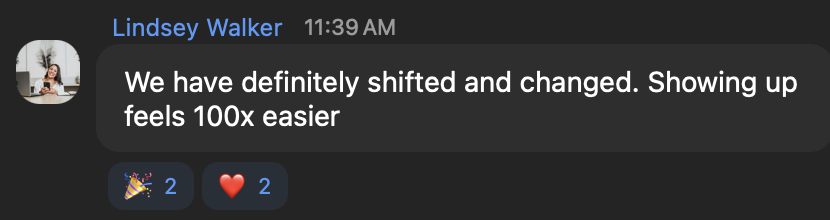
- Showing up feels 100x easier
- Describes it as "truly looking yourself in the mirror—and finally seeing yourself"
The Full Story
Lindsey's situation is the one most people in the creator space won't say out loud. She wasn't a beginner. She had four years of consistent content creation behind her—and it had ground her down to almost nothing.
The burnout wasn't from laziness or lack of discipline. It was the cost of the gap: the distance between who she was in real life and who she was performing online. "I did not feel safe showing up at all. I felt like I needed to rehearse something." She was also in the middle of a cross-country move, a breakup, and a season of her life that was genuinely hard. The performance tax on top of all of it was untenable.
The moment that changed things came during the first Office Hours session. Lindsey was explaining everything she was carrying. Justin listened, then asked her a simple, disarming question: why would it be a bad thing for people to reach out and genuinely ask if she was okay?
Then he looked at her directly and asked: "But are you okay?"
She lost it. Because she'd been holding up the "strong one" persona for so long—online and off—that she'd stopped letting herself answer that honestly. In that moment, something broke open. She didn't have to be the strong one. She didn't have to perform a version of herself that could handle everything. She could just show up.
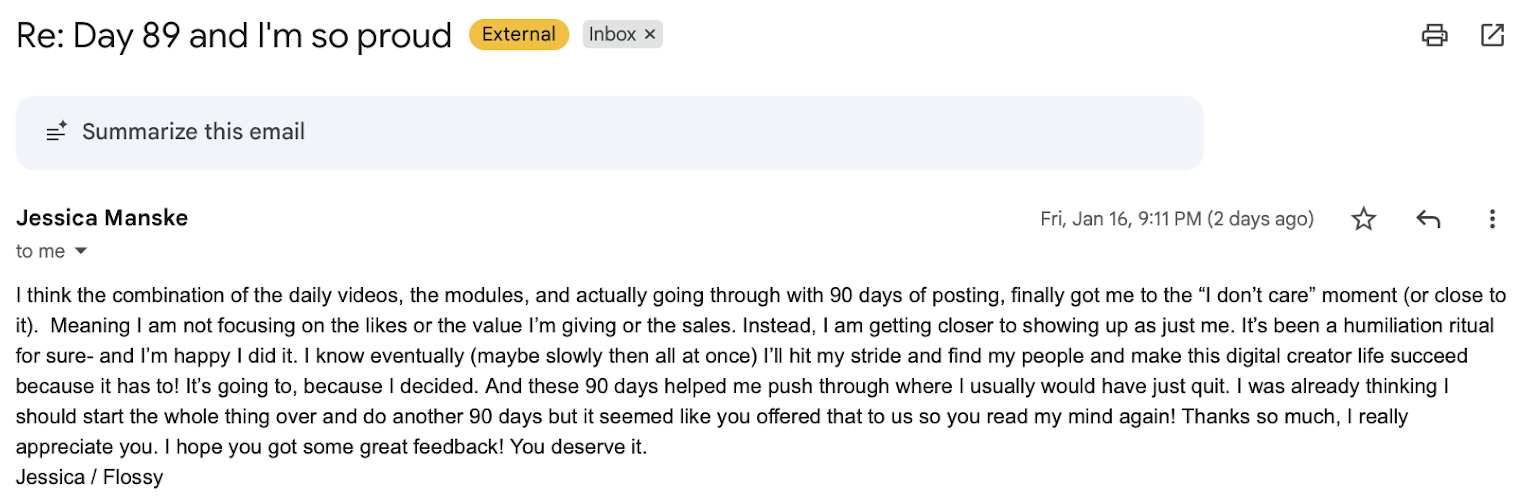
What Lindsey found at the end of 90 days wasn't a new content strategy. It was something she described as embodiment—the ability to be the same person online that she was everywhere else. "There is so much more alignment and just allowance for me to be more of the same person."
She describes ShowUp90 the way a lot of graduates do—not as a content program but as something closer to therapy. The difference, she says, is that you're not just talking about being seen. You're practising it. Every day. Until it stops being scary and starts being you.
"It's like truly looking yourself in the mirror—not only being seen and heard, but allowing yourself to actually see yourself. I don't think until going through this container that I was able to truly embody that."
—Lindsey Walker, ShowUp90 GraduateWatch what 90 days does.
Same person. Different relationship with being seen.
This is what 90 days of showing up actually looks like.
BEFORE
AFTER
BEFORE
AFTER
You're here for one of three reasons.
01
You want to know yourself.
Self-awareness married with self-worth and self-trust is the most unbeatable trifecta there is, and it will shift your life in ways you don't even see yet — including ways you're not going to be thrilled with, because once you see shit you can't unsee shit. Learning to embody yourself unapologetically, to stop shape-shifting based on who's in the room and how much power they have — that's what this does. This is serious life change. That's what happens when you do the work.
02
You want to make more money.
I love money more than most, so I get it. Here's the thing — learning to make content is one thing. Learning to make content that tells a story and builds trust is another. Learning to make content that tells a story, builds trust, and gets buy-in so people actually take action — join your list, purchase from you, want to work with you — is an entirely different thing. And all of it relies on the same skill: the ability to speak your truth with conviction. The amount of money you make is directly tied to the amount you believe you deserve to make. You will realize halfway through that this has so much more to do with being yourself than making money. And then you will realize that being yourself is the fastest way to make more money than you've ever dreamed of.
03
You want to be seen and build a following.
Of course you do. And you've probably looked for answers in strategy and hooks and templates and formulas and viral trends, and felt incredibly hollow. Because shoving yourself into a formula built to fit everyone is violent. You haven't found what you're supposed to fit into — because you have to craft it yourself. It has to be bespoke. This is the harder way to create content in the beginning and the only way that doesn't lead to guaranteed burnout. It's not about niching down. It's not about how short your videos can be. It's about making the unpopular choices and coloring outside the lines until you realize the lines were bullshit. All that really matters is becoming a version of yourself so truly magnetic that people can't help but follow and want to be part of your world. Why build a following as a version of yourself that isn't real? That's just a lifelong commitment to a performance you hate.
Whichever door brought you here — this is the container.
You want to know yourself:
You want more self-confidence → You get the realization that confidence looks and feels nothing like you thought it did. And at day 90 you'll realize you can't put a price on it.
You want less self-consciousness → You get more self-awareness, because self-consciousness is just self-awareness with judgment heaped on it. You learn what it means to be thoughtful about yourself without the cruelty.
You want to take up more space → You get a nervous system that's been trained through 90 days of exposure that being visible won't kill you. Deep lack of apology takes courage and resolve and the knowledge that you're going to be okay no matter what.
You want to embody yourself more fully → You get the ability to tap into your emotions and marry them to the story you're telling, instead of just regurgitating information and wondering why no one connects with you.
You want better boundaries → You get a 90-day practice that forces you to look at your schedule, prioritize yourself, and realize that boundaries are just a manifestation of your willingness to focus on you before everyone else.
You want to make more money:
You want to market your business without dreading it → You get the ability to speak about what you do with conviction, because you've stopped performing and started telling the truth. Turns out that's what sells.
You want to speak on camera with authority → You get authority that's real, not performed. The kind that comes from 90 days of saying what you actually think instead of what you think they want to hear.
You want to stop avoiding content entirely → You get a relationship with visibility that isn't based on willpower anymore. You stop avoiding it because it stops being something your body fights.
You want consistent visibility for your offers → You get something better — consistent visibility as yourself, which builds the kind of trust that actually converts. People don't buy from brands. They buy from people they believe.
You want to be seen and build a following:
You want to post consistently without burnout → You get a daily practice that's built on being yourself, not performing. That's the only version of consistency that doesn't eventually destroy you.
You want to grow a platform you're proud of → You get a platform that actually sounds like you, which is the only one you won't eventually resent and abandon.
You want to stop second-guessing yourself → You get 90 days of proof that your instincts were right all along. You just never trusted them long enough to find out.
You want creative freedom in your own voice → You get the experience of coloring outside the lines until you internalize that the lines were always bullshit.
You want performance anxiety eliminated → You get the realization that the anxiety was never about performing. It was about being seen as yourself. Once that's safe, the anxiety has nowhere to live.
The Program: What ShowUp90 Actually Is
90 days of becoming yourself in public. For 90 days, you show up publicly every day.
Not perfectly. Not strategically. But honestly. Here's what I need you to understand before I explain a single thing about this program: you are going to be bad at this. Possibly for a while. Your content might be mediocre. Your videos might make you cringe. You're going to record things that feel awkward and messy and not at all like the polished version you've been performing for years.
Good.
You have to get really fucking bad at this before you can get better at it in a way that's real. Because right now, you're good at a version of showing up that isn't you. And the only way to find the version that IS you is to let go of the one that's been working — and tolerate the freefall in between.
DAYS 1–18
Self-Trust
The foundational work. You learn why you flinch under observation, what your nervous system actually needs to feel safe, and how to start building evidence — real, felt, somatic evidence — that being seen won't kill you. This is where most people realize the problem was never content. It was never strategy. It was their body saying "danger" every time they hit record.
DAYS 19–36
Your Story
Strip away the performance. Discover what you actually have to say — and why the most personal thing is always the most universal. This is where your voice emerges. Not the voice you think people want to hear. The one that's been buried under years of filtering and editing and making yourself palatable. You learn to hear your own story the way a stranger would hear it for the first time — and you stop burying the remarkable parts like they're nothing.
DAYS 37–54
Embodiment
The work moves into your body. You learn to feel at home on camera — not by faking confidence, but by doing enough reps that your nervous system stops treating visibility as a threat. This is where summoning something from the depths of your actual body, processing it without editing, and letting it come out of your mouth stops feeling terrifying and starts feeling like relief. You stop performing and start being. And you can feel the difference.
DAYS 55–72
Strategy
Now that you know who you are on camera, you layer in what actually works. Storytelling structure. Specificity. Hooks that are actually yours. Frameworks I've built from years of studying how trust gets built through a screen — not templates you copy from someone else's playbook. This is the part most people try to start with — and it's exactly why it never works. Strategy on top of disconnection just produces polished emptiness. Strategy on top of self-trust produces content that makes people stop scrolling and feel something.
DAYS 73–90
Sustainability
Build the system that outlasts the program. Create a content practice you can maintain for years — not because you have to, but because you want to. By now, this isn't discipline. It's just how you operate. You've become someone who shows up. The last 18 days are about making sure that person doesn't go anywhere once the container is gone.
What you're walking into every day:
Every morning, I deliver a coaching video — a concept, a framework, a technique, plus a posting assignment. These aren't generic prompts. They evolve as you do. They meet you where you are on Day 3 and they meet you where you are on Day 74, and those are two very different humans. You'll think "he got me" more times than you can count.
Some days, the concept will be heady. Some days it'll be somatic. Some days you'll watch the video and not be entirely sure you nailed the assignment. That's fine. If you posted, you nailed it. Did you show up? Then you did it right. The bar isn't excellence. The bar is presence. The best version of your content is never the version that doesn't get posted. Whatever makes it out of your mouth and onto the internet that day — that's the win.
The Office Hours.
Three times during the 90 days, we get on a live call together. And I need to be honest with you about what these actually are, because "office hours" undersells it by a mile.
You do not get access to me outside of these calls. There are no DMs. No Voxer. No "quick question" Slack channel. These three calls are it. Which means when we're in the room together, the room means something.
Here's what happens: you submit a piece of content. I pull it up. I watch it in front of everyone. And then I direct you. I don't give you a compliment and a suggestion. I tell you what I hear underneath what you said. I tell you where you went safe when you could have gone specific. I tell you where the performance crept in and where the real person broke through.
I reflect back to you what you cannot see about yourself — the thing that's so close to your face you've lost the ability to feel its weight. And I do it with frameworks I've built over years of studying how stories actually work, how trust actually gets built, how a human being actually communicates something true through a screen.
But here's what nobody expects: watching me do this with someone else is where the real magic happens. You sit there watching me direct another person who is struggling with the exact same thing you are. You see yourself in their work. You hear me redirect them. You watch their face when something lands. And something unlocks in you that no amount of private journaling could ever touch — because the trigger is present. You are being witnessed while watching someone else be witnessed. That's exposure therapy happening in real time, and most people walk away from these calls saying it was the single most valuable part of the experience.
I am not a content coach on these calls. I am a director. I see people the way I was trained to see performers — what's true, what's manufactured, where the body is saying one thing and the mouth is saying another. I've spent over a decade making people feel safe in front of a camera and helping them access something real. This is what I do. And these three calls are where you feel it most directly.
Why there's no community.
ShowUp90 doesn't have a Slack channel. No Discord. No group chat. No community forum. And that's not a limitation — it's the entire philosophy.
This is an incredibly isolating journey. I'm not going to pretend otherwise. It is a lonely thing to do. And I don't say that to scare you — I say it because if you can do this without needing constant adulation or coddling from a group of strangers, that is one of the only things that guarantees your longevity and your future success here.
No one is going to cheer for you louder than you will. No one is going to want it harder for you than you.
And learning that — really learning it, in your body, through 90 days of showing up for yourself with no one clapping — is one of the most important things this experience gives you.
The last thing you need is another room full of people to perform for. Another notification stream to manage. Another audience to shape-shift for. This is a solo practice with structured support — so you can focus on your nervous system, not everyone else's.
That said — if you search the ShowUp90 hashtag, you'll find a world full of people doing this alongside you. There's nothing stopping you from reaching out, connecting, enjoying other people's content. I leave that to you. Interact in the way that feels good to you, or don't. This is your practice.
Why it's 90 days. Why it's every day. Why it's relentless.
Neuroscience says it takes 66 to 150 days of repetition before a new behavioral pattern sticks. So 90 days isn't arbitrary — it's the minimum effective dose for real identity-level change.
And the daily requirement isn't about discipline. It's about making the old patterns unsustainable. Perfectionism cannot survive inside 90 days of daily posting. You literally cannot sustain it. You cannot do 12 takes every day for three months. You cannot rewrite every caption five times. You cannot agonize over your lighting and your hair and whether you're being too much — because there's simply no time.
The relentlessness is the design.
The container itself forces the very unlearning the program is built to create. By making it daily, you don't have to beat your perfectionism. You just outrun it until it can't keep up. And one day you look back and realize it stopped chasing you weeks ago.
By Day 90, you'll have 90 pieces of evidence your body can point to. 90 reps of being seen and surviving. 90 moments of proof that you are safe, you are enough, and you have something to say.
Now — here's what you actually walk away with.
If you came here to know yourself:
You wanted more self-confidence → You get the realization that confidence looks and feels nothing like you thought it did. And at Day 90 you realize you can't put a price on it.
You wanted less self-consciousness → You get more self-awareness, because self-consciousness is just self-awareness with judgment heaped on it. You learn what it means to be thoughtful about yourself without the cruelty.
You wanted to take up more space → You get a nervous system that's been trained through 90 days of exposure that being visible won't kill you. Deep lack of apology takes courage and resolve and the knowledge that you're going to be okay no matter what.
You wanted to embody yourself more fully → You get the ability to tap into your emotions and marry them to the story you're telling, instead of just regurgitating information and wondering why no one connects with you.
You wanted better boundaries → You get a 90-day practice that forces you to look at your schedule, prioritize yourself, and realize that boundaries are just a manifestation of your willingness to focus on you before everyone else.
If you came here to make more money:
You wanted to market your business without dreading it → You get the ability to speak about what you do with conviction, because you've stopped performing and started telling the truth. Turns out that's what sells.
You wanted to speak on camera with authority → You get authority that's real, not performed. The kind that comes from 90 days of saying what you actually think instead of what you think they want to hear.
You wanted to stop avoiding content entirely → You get a relationship with visibility that isn't based on willpower anymore. You stop avoiding it because it stops being something your body fights.
You wanted consistent visibility for your offers → You get something better — consistent visibility as yourself, which builds the kind of trust that actually converts. People don't buy from brands. They buy from people they believe.
Your business cannot be served by content that doesn't serve you. And once you learn how to show up as yourself — really yourself — layering strategy and marketing on top to drive your business is not hard at all. It just isn't. I've watched it happen over and over. The trust-building is the hard part. And that's what this does.
If you came here to be seen and build a following:
You wanted to post consistently without burnout → You get a daily practice that's built on being yourself, not performing. That's the only version of consistency that doesn't eventually destroy you.
You wanted to grow a platform you're proud of → You get a platform that actually sounds like you, which is the only one you won't eventually resent and abandon.
You wanted to stop second-guessing yourself → You get 90 days of proof that your instincts were right all along. You just never trusted them long enough to find out.
You wanted creative freedom in your own voice → You get the experience of coloring outside the lines until you internalize that the lines were always bullshit.
You wanted performance anxiety eliminated → You get the realization that the anxiety was never about performing. It was about being seen as yourself. Once that's safe, the anxiety has nowhere to live.
This is identity repair under visibility. Not growth hacks.
This isn't motivational fluff. It's a methodology.
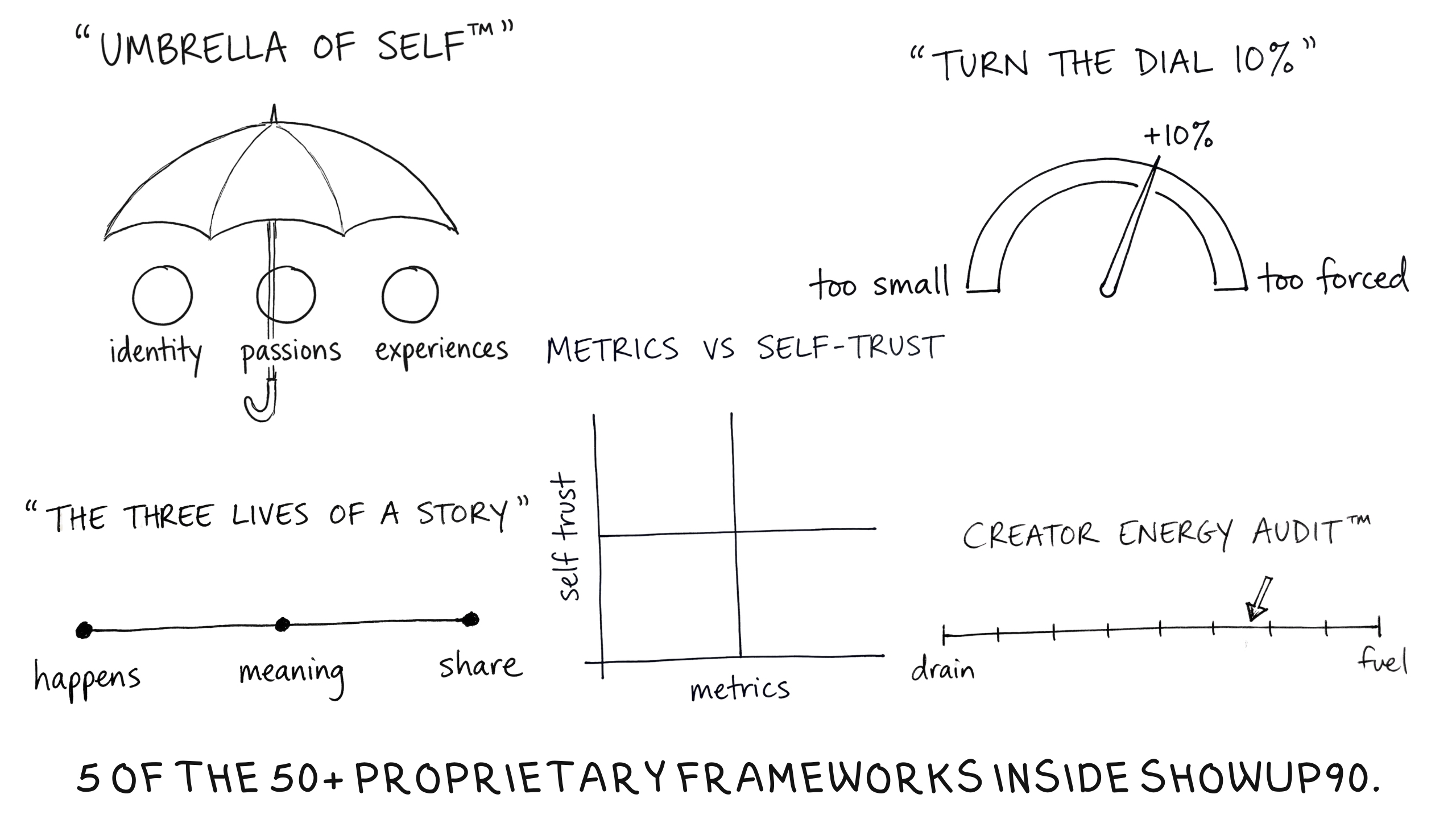
Inside ShowUp90, you're not just getting daily prompts and a pep talk. You're getting frameworks — visual, tangible, proprietary tools built from years of studying how humans actually communicate, build trust, and tell stories that land.
These are concepts you will not find in any other program, any course, any Instagram carousel. They come from a theater and performance studies education, five years of coaching hundreds of people through visibility work, and a brain that thinks in shapes and systems.
Here are five of them. There are dozens more inside the 90 days.
(How to visualize it: I'd do a single horizontal row or a tight grid — all five on one visual plane so the reader takes in the breadth at a glance. Not stacked vertically like a scroll. Side by side, like a spread of cards laid on a table. The hand-drawn quality is a strength — it looks like they came from a real person's brain, not a design agency. It communicates "this person actually thinks this way" which is the whole point. If you want to elevate it slightly, put them on a lightly textured background — like they're sitting on a desk or pinned to a wall. But don't over-polish them. The rawness is the credibility.)
Every one of these becomes a lens you carry with you — on camera, in conversations, in meetings, in your life. They don't expire when the program ends. They become part of how you see.
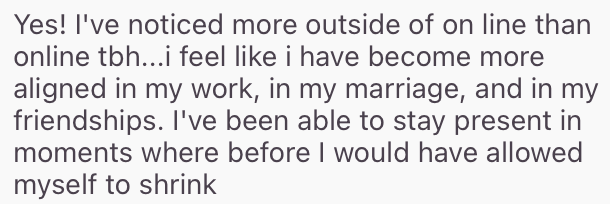
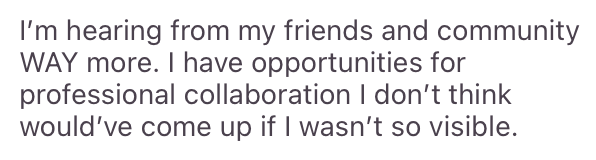
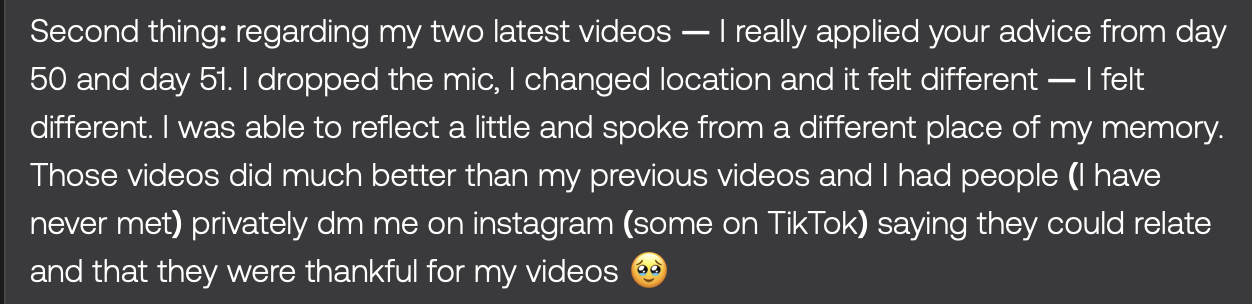
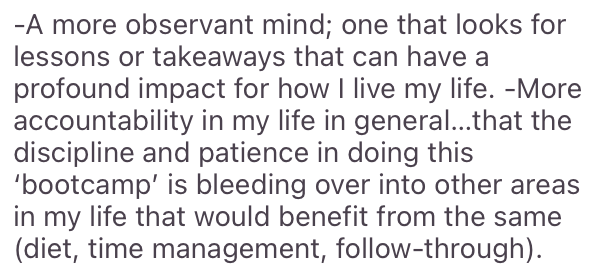
"I've noticed more outside of online, honestly. I feel like I have become more aligned in my work, in my marriage, and in my friendships. I've been able to stay present in moments where before I would have allowed myself to shrink."
-Ellie Martelli, ShowUp90 Graduate
The Transformation
Other programs sell you likes. I'm selling you liking yourself.
After ShowUp90, people don't just post more.
They become someone they actually want to be.
I need to be specific about this because the transformation is so much bigger than content, and I don't want you to miss it. Yes — your content gets better. Dramatically. The way you speak on camera after 90 days of daily practice will be unrecognizable from where you started. You'll find your rhythm, your timing, your voice. You'll learn to tell a story that makes a stranger stop scrolling and feel something. You'll develop an instinct for specificity — for knowing exactly when to zoom in and when to pull back, for landing the detail that makes people say "holy shit, are you inside my head?" Your content will be better because YOU will be better. The skill and the self aren't separate.
But that's the surface.
Here's what's actually underneath.
Confidence.
Not the performed version. Not the "I'm an open book, nothing bothers me" armor you've been wearing. Real confidence — the kind that's so quiet it doesn't need to announce itself. Being your authentic self becomes your default. Not your aspiration. Not something you have to summon. Just the way you walk into a room.
At least I like me so much more than I used to.
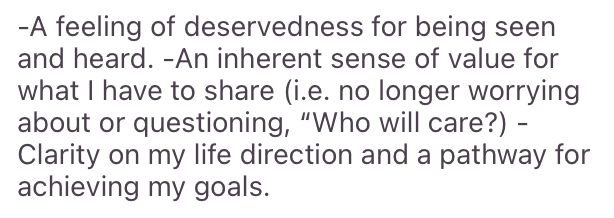
That's what a past participant said. Not "I grew my following" or "I hit my revenue goal." Just: I like me now. That's the transformation no one expects and everyone wants.
Consistency.
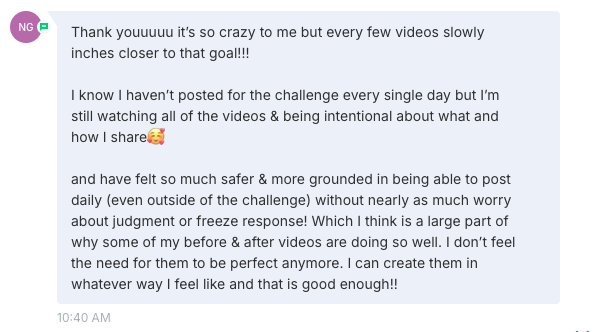
Not the grind-your-teeth, post-through-the-pain kind. The kind where showing up stops being something your body fights. You stop betraying yourself. You stop backing down. You stop disappearing. You post because it's Tuesday and you have something to say and it doesn't occur to you NOT to say it. It's not discipline anymore. It's just who you are.
I post every day now — multiple times a day, lately — and I don't care. It's not hard. That's what five years of this practice has given me. ShowUp90 gives you the first 90 days of it.
Clarity.
You know who the fuck you are. You know what you want. You know how you think. And you know how to say it without apologizing, hedging, or asking permission first. No more "I'm going to be candid for a second." No more "if I could be fully transparent." You just say the thing. People can't misunderstand you if you tell them exactly what's on your mind.
Safety.
Candor and transparency set you free. You don't have to hide anything anymore — not from a room full of strangers, not from your parents' friends, not from your coworker who might see your video, not from yourself. The thing you were so terrified of — being fully visible — becomes the thing that makes you feel most alive. Because you've done it 90 times and the catastrophe never came.
Sovereignty.
Doing whatever the fuck you want and not caring what other people think. That's when your life starts. You stop checking your phone to see if the world approved of you today. Your addiction to social media was never about posting — it was about checking. Refreshing. Waiting to be told you mattered. But when you're no longer waiting to be told who you are by the world around you, you don't have to pick up your phone quite as much. You came in thinking you'd post more. You'll actually check less.
Flow.
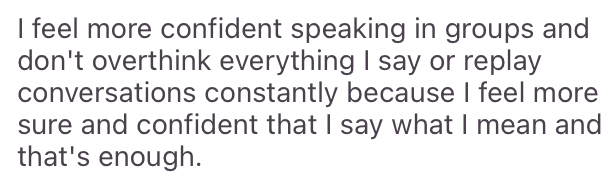
You replace overthinking with self-awareness. Being yourself stops being something you have to think about. You're present in your body. You're expressing from a place of safety and truth. You summon what's real and you let it come out of your mouth and you trust that it's enough — because you have 90 days of evidence that it is.
The external result is content. The internal result is you — a version of yourself you actually recognize.
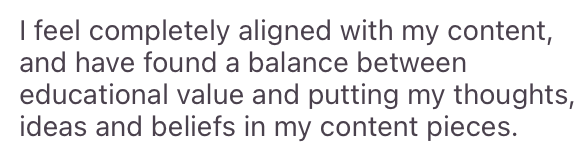
And here's what I want you to hear, because it matters for the people in here who are building businesses: once you learn how to show up as yourself — really yourself — everything else gets easier. Marketing stops being a performance. Sales stops being manipulative. Visibility stops costing you your sanity. Your business can't be served by content that doesn't serve you — and now your content serves you, because it IS you. The business results aren't separate from the identity results. They're downstream of them.
You want to know what this actually looks like, lived in?
My bank account looks cute. My social calendar is full. I'm happy and I'm healthy. I've got good relationships with my family. Close friends that matter to me. My hardest decision today was whether to work from home or go to my fancy gym.
I'm doing okay. And I'm doing okay because of this — because I faced the moments of internal discomfort that are currently keeping you from showing up, again and again and again, until they were no longer issues.
That's what's on the other side.
Objection Handling
Yeah, but.
I hear you. Here are the stories you're about to tell yourself, and here's the truth underneath every single one of them.
I'm too busy.
I don't know what to post.
I'm not interesting enough.
My content is going to suck.
90 days is a lot.
Can't I just do a 30 day challenge on my own?
This seems really intense.
What if I fall behind?
I've done therapy. I've journaled. Isn't that enough?
But I'm a business owner — won't this hurt my content strategy?
What if it doesn't work?
THE OFFER
ShowUp90: 90 days of becoming yourself in public.
Here's everything you're walking into:
90 daily coaching videos from me — a concept, a framework, and a posting assignment every single morning, designed to evolve as you do. Day 3 and Day 74 are two very different humans. The prompts know that.
3 live office hours sessions — 90 minutes each. You submit your content. I watch it. I direct you. I reflect back to you what you can't see about yourself. And everyone else in the room gets transformed just by watching. These are the only times you get direct access to me. They are worth the entire investment on their own.
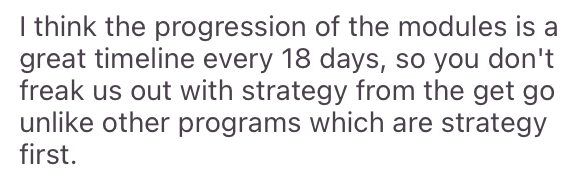
A 5-module progression — from self-trust to story to embodiment to strategy to sustainability. Each phase builds on the last. By the end, you haven't just learned to post. You've learned to be yourself under observation — on camera and off.
A structure designed to make perfectionism unsustainable — daily posting for 90 days means you can't overthink, over-edit, or over-perform. The container itself does the unlearning for you.
No community. No Slack. No Discord. No group chat. — This is a solo practice with structured support. You focus on your nervous system, not everyone else's.
Pay in Full
$1,997
Payment Plan
3 × $697
This is an evergreen program. You can start any day. Your 90 days begin the moment you do.
THE GUARANTEE
If you complete 85 or more days of ShowUp90 and genuinely feel no shift in your confidence, your self-expression, or your relationship with visibility — email us and we'll refund your investment.
That's it. No hoops. No "prove you did the work." No fine print designed to make it impossible to claim.
I offer this because I've watched this program work — over and over and over. No one who has completed the full experience hasn't gotten everything they wanted from it. That's not marketing. That's a pattern I've observed across every round, with real people, doing real work.
The testimonials aren't from people who found it easy. They're from people who found it brutal and kept going anyway.
I'm not worried about this guarantee. And the fact that I'm not worried should tell you something.
If you do the work, the work works.
You've read this far.
Which means something on this page got through. Some line, some bullet, some moment where you saw yourself so clearly it made your stomach drop. So now you're sitting here with two versions of the next 90 days.
In one, you close this tab. You tell yourself you'll think about it. You save the link. Maybe you screenshot something I said that hit. And then you go back to the same patterns — the careful captions, the deleted drafts, the almost-posting, the shape-shifting, the slow disappearance of the person you actually are. Not because you're weak. Because it's familiar. Because it's safe. Because you've been doing it your entire life, and the gravity of that is enormous.
In the other, you decide today is the day you stop rehearsing and start performing as yourself.
The version of you who speaks freely already exists. They're just buried under years of carefulness. ShowUp90 is the process of digging them back up.
You are not too much. You are not too late. You are not too broken.
You are not too boring. You are not too busy.
You are too hidden. And you have been for too long.
Unless you're comfortable with simply not being the main character in your life story — this is where that changes.
If not now, then when?
What the fuck are you waiting for?

Join Our Free Trial
Get started today before this once in a lifetime opportunity expires.